Saliva / Oral Fluid Drug Testing for Cannabis
Oral fluid (saliva) testing detects parent Δ9-THC directly in the mouth. It has a much shorter detection window than urine testing — typically 12 to 72 hours — but a better relationship to recent use. Oral fluid testing is growing rapidly and is authorized (but not yet operational) for DOT workplace drug testing.
What Oral Fluid Tests Detect
Oral fluid tests measure parent Δ9-THC directly, not THC-COOH. When cannabis is smoked or vaped, some THC is deposited in the oral cavity and mixes with saliva. This oral-cavity deposition is the primary source of detectable THC in oral fluid after inhalation.
For edible cannabis, there is no oral cavity deposition (or very little), so oral fluid THC levels are substantially lower after oral administration than after smoking at the same dose. This is relevant for anyone whose primary use is edibles.
SAMHSA Cutoffs for Oral Fluid
SAMHSA's Oral Fluid Mandatory Guidelines (OFMG), effective October 10, 2023:
- Initial screen: 4 ng/mL THC
- Confirmation: 2 ng/mL THC
Detection Window
| Usage Pattern | Detection Window |
|---|---|
| Single use (smoked) | 12–24 hours |
| Occasional | 24–48 hours |
| Regular | 24–72 hours |
| Heavy/daily | Up to 72 hours |
| Chronic heavy | Up to 72+ hours (variable) |
| Edibles only | Substantially lower / may not detect |
The window is much narrower than urine testing because oral fluid THC is primarily from recent inhalation deposits rather than from sustained metabolite excretion.
DOT Oral Fluid Testing Status
The Department of Transportation authorized oral fluid testing as an alternative to urine via a final rule effective December 5, 2024. This was a significant policy shift — DOT had been urine-only for decades.
However, DOT oral fluid testing is not yet operationally available. The rule requires at least two HHS-certified oral fluid labs before the program can go live. As of April 2026, zero U.S. laboratories have been certified for federal oral fluid testing. Implementation has repeatedly slipped.
Rapidly Evolving
Where Oral Fluid Testing Is Currently Used
- Private employers outside federal regulation — increasingly common, especially for pre-employment
- Some roadside DUI investigations — a few states and Canadian provinces use oral fluid screening devices
- Probation and reasonable-suspicion testing — where rapid point-of-care results are valued
- Research studies — convenient for repeat sampling
- Professional sports — some leagues use oral fluid for in-competition testing
Collection Procedure
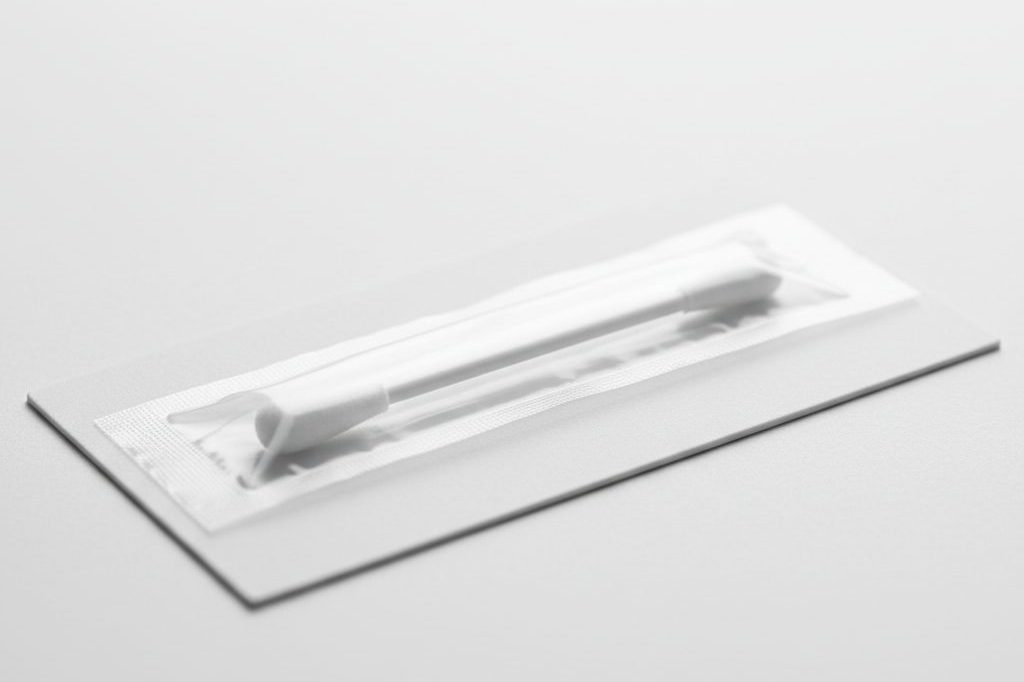
Oral fluid collection uses a collection device placed in the donor's mouth for a specified period (typically 1–5 minutes). Modern devices include:
- Quantisal (Immunalysis) — lab-based with oral fluid collection
- Intercept i2 (OraSure) — common lab device
- Dräger DrugTest 5000 — point-of-care roadside device
- Alere DDS2 — roadside point-of-care
The collection is directly observed because the donor is holding the device in their mouth. This makes oral fluid testing much harder to adulterate than urine testing.
Advantages of Oral Fluid
- Shorter, more recent-use-relevant window than urine
- Observable collection eliminates most adulteration and substitution
- Non-invasive compared to blood
- Detects parent THC, which has a closer relationship to impairment than urinary metabolites
- Point-of-care devices can give results in minutes
Limitations
- Oral cavity contamination — recent cannabis smoking produces high THC in oral fluid even if no meaningful amount entered systemic circulation
- Edibles produce lower oral fluid concentrations, which can lead to missed detection of real impairment from edibles
- Not yet operationally available for DOT testing
- Point-of-care devices vary in reliability
- Passive exposure can theoretically cause detectable levels at very low cutoffs, though studies suggest this is rarely a real-world problem at the SAMHSA confirmation threshold
Cost
- Point-of-care oral fluid screening: $15–40 per test
- Lab-based oral fluid with confirmation: $40–100