Hair Follicle Drug Testing for Cannabis
Hair follicle testing is often marketed as the longest-window cannabis drug test, claiming to detect use for up to 90 days. The reality is more complicated: hair tests have significant sensitivity limitations for light users, a 5 to 10 day lag before any use can be detected, and documented concerns about racial bias. Hair testing is not approved for federal workplace drug testing programs.
What Hair Tests Detect
Hair tests look for THC and THC-COOH that have been incorporated into the hair shaft from the bloodstream during hair growth. Because head hair grows at approximately 0.5 inches per month, a standard 1.5-inch sample taken close to the scalp theoretically represents the past 90 days of use. Longer samples or beard/body hair give different windows.
The detection mechanism is passive: as the hair follicle produces new hair, drug molecules and metabolites from the bloodstream become trapped in the keratin structure of the growing hair. Once incorporated, they remain there as the hair grows outward.
Sensitivity Problems
Hair testing has a significant sensitivity gap for cannabis, especially for occasional users. Taylor et al. (2017, PMID 27648739) reported:
- Only 39% of light cannabis users tested positive on hair testing
- About 75% of heavy users tested positive
In other words, a hair test might miss more than half of occasional cannabis users. For a test marketed as the longest-window option, this is a substantial weakness — you could have a false sense of security about someone who has in fact been using.
The 5 to 10 Day Lag
Hair does not incorporate drugs instantly. THC and THC-COOH must first enter the bloodstream, then be deposited into the follicle, and then grow out enough to be clippable. As a result, hair testing cannot detect cannabis use from the past 5 to 10 days. A person who used cannabis on Sunday cannot be detected by hair testing the following Friday.
This means hair testing is actually bad at detecting very recent use — the opposite of what many people assume.
Racial Bias Concerns
For drugs other than cannabis — particularly cocaine and opiates — documented research shows dark hair incorporates drug molecules at 7 to 15 times higher concentrations than blond or light hair. This creates a documented racial bias against people with darker hair. Court challenges including Jones v. City of Boston (1st Circuit) have addressed this concern.
For cannabis specifically, the evidence of bias is weaker. Huestis 2007 (PMID 17881659) found no significant racial difference in cannabis hair testing results. But the concern remains, and hair testing is widely viewed as more legally vulnerable in cannabis contexts than other test types.
Where Hair Testing Is Used
- Private employers who want longer detection windows than urine provides
- Child custody cases in some states — though California (via Deborah M. v. Superior Court, 2005) prohibits hair testing in custody cases
- Some probation programs for return-to-monitoring after a urine positive
- Immigration and visa applications in some contexts
- Professional licensing for certain healthcare and legal positions
Hair testing is NOT approved for SAMHSA-certified federal workplace drug testing programs or DOT-regulated testing. Federal workers subject to mandatory testing are urine only (with oral fluid authorized but not yet operational).
Collection Procedure
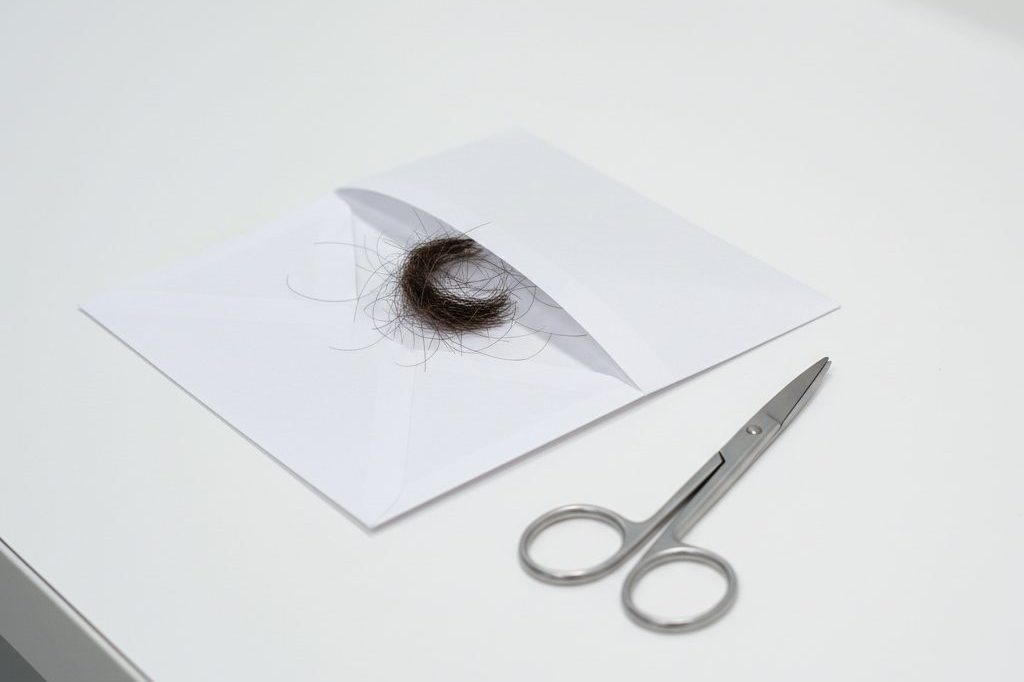
A sample of approximately 100–120 strands is cut with scissors as close to the scalp as possible (not plucked from the follicle — that is a common myth). The sample is typically 1.5 inches long, representing 90 days of growth.
If the donor has short hair, body hair can be used as an alternative. Body hair grows more slowly and represents a longer time window that is less precisely defined.
Head shaving is not a foolproof way to avoid hair testing — most labs will request body hair if head hair is unavailable, and extremely short sample collection can still be performed.
Washing and Pre-Treatment
Before testing, labs wash hair samples to remove external contamination (environmental exposure from passing someone smoking, hair products containing hemp, etc.). The wash step is designed to distinguish drugs incorporated from within the bloodstream from drugs deposited on the hair surface.
The wash procedure varies by lab, and disputes over whether a positive reflects internal use or external contamination are occasionally raised in legal proceedings.
Cost
- Standard cannabis hair test: $75–150
- Expanded panels with multiple drugs: $150–300
- Forensic-grade with full chain of custody: $200–500+
Related Reading
- All Test Types
- Child Custody — California bans hair testing in custody cases
- Fingernail Testing — similar long-window rationale